
Home to incredible wildlife, beautiful beaches and unforgettable road trips, there are also some seriously dangerous animals in Australia!
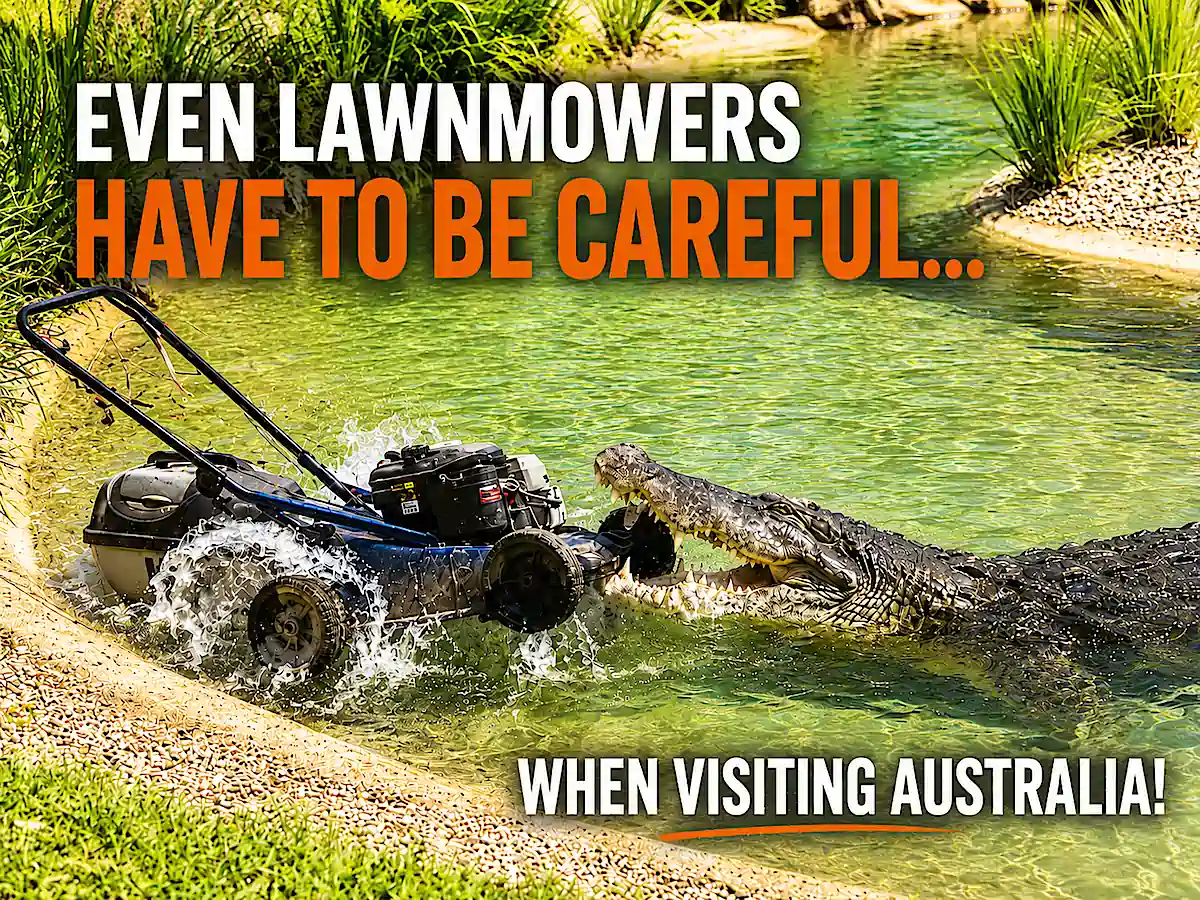
Even lawnmowers have to be careful when visiting Australia!
Should You Be Worried About Dangerous Animals in Australia?
Fortunately, serious encounters are rare when you give wildlife space and follow local warnings.
This Travelwheels guide will help you recognise the most dangerous animals in Australia, stay safe and enjoy every moment of your campervan holiday.
Which Animal Causes the Most Deaths in Australia?
Horses are classed as the most dangerous animal in Australia, as they are linked to more animal-related deaths than snakes, spiders, sharks or crocodiles.
Among venomous animals, bees and wasps are a greater danger than many visitors expect!
Their stings cause more hospital admissions than snake or spider bites because they can trigger severe allergic reactions.
In 2017 to 2018, bees and wasps caused 12 deaths. Venomous snakes caused seven, while spiders caused none, according to the Australian Institute of Health and Welfare.
Dangerous Animals in Australia: Venomous Spiders!
Australia’s spiders have a fearsome reputation, and spotting one is enough to make most visitors jump!
They are definitely in the category of the most dangerous animals in Australia, but the reassuring news is that most spiders are harmless, while serious bites are rare.
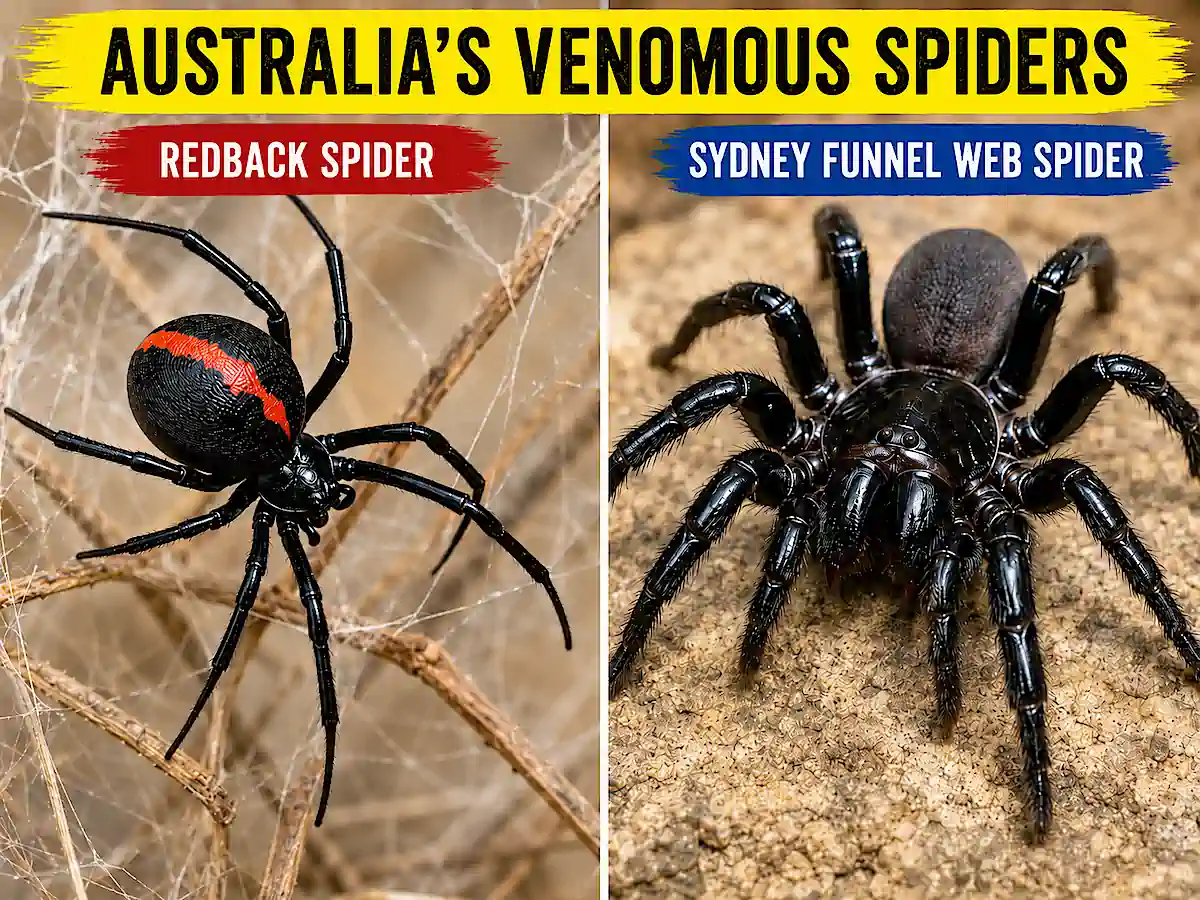
The two venomous spiders travellers should recognise are the redback spider and the Sydney funnel web spider.
Redback Spider
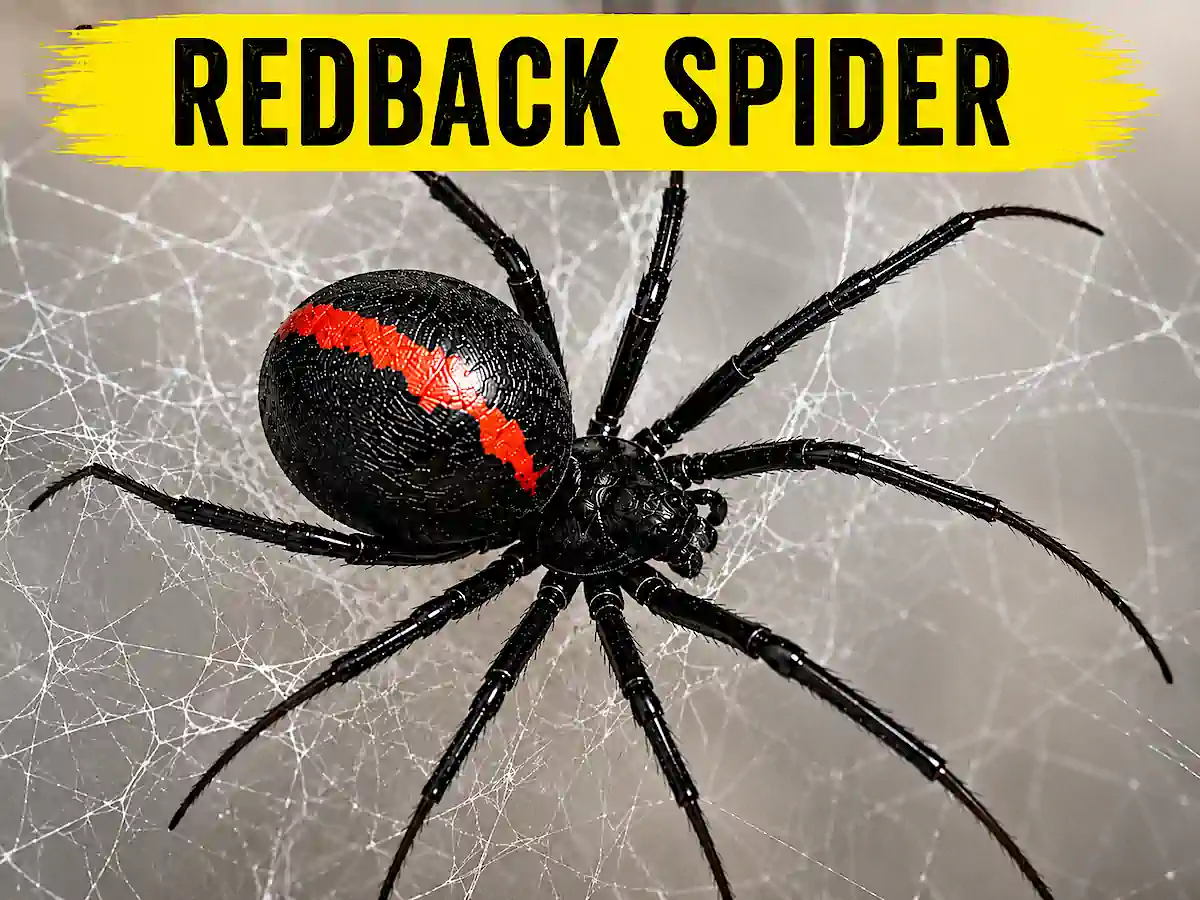
Redbacks are common around homes, sheds and urban areas, especially during the warmer months.
The venomous female is the one to watch, and she can definitely be classed as one of the most dangerous animals in Australia!
She is black with a distinctive red stripe and loves dry, sheltered hiding places.
You may find one beneath garden furniture, inside sheds or in shoes left outside overnight.
The famous Australian warning about checking underneath the toilet seat for Redbacks is not completely made up!
A redback bite can cause intense pain, sweating, headaches and muscle spasms.
Wash the bite with soap and water, apply a cold pack for 15 minutes and seek medical help immediately.
Sydney Funnel Web Spider
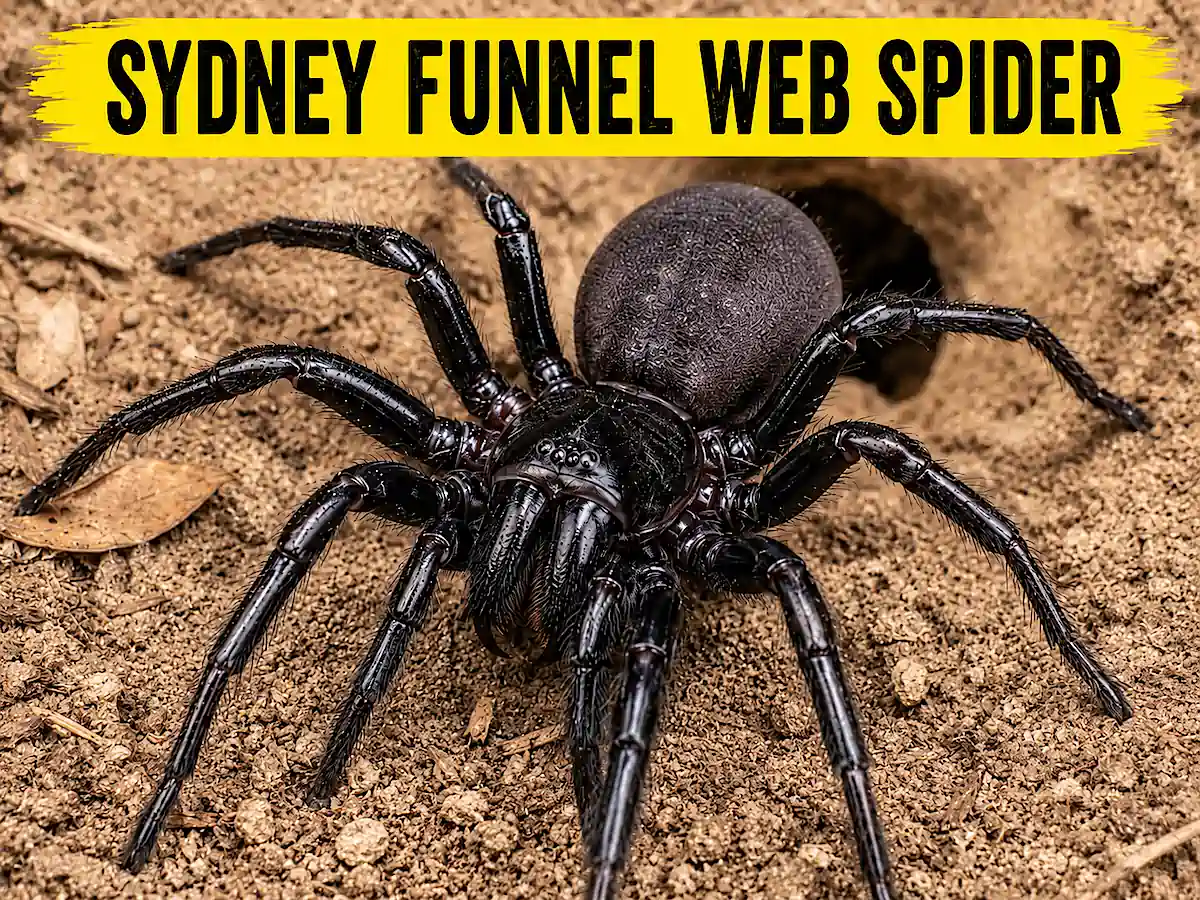
The Sydney funnel web has one of the fiercest reputations in Australia!
It is definitely classed as one of the most dangerous animals in Australia, so watch out!
Funnel web spiders are found around Sydney and are strongly associated with the Blue Mountains.
They prefer moist places beneath rocks, logs, and dense garden plants. During summer and autumn, males often wander at night after rain while searching for females.
Check shoes left outside and never assume the large black spider at the bottom of a swimming pool is dead. Funnel webs can survive underwater for hours.
The wandering male is the one you really do not want to meet.
A bite can be extremely serious, although no deaths have been reported since antivenom was introduced in 1981.
If someone may have been bitten by a funnel web or any large black spider, call 000 immediately. Keep them still and apply a pressure immobilisation bandage while waiting for the ambulance.
Dangerous Animals in Australia: Venomous Snakes!

Australia is home to 20 of the world’s 25 most venomous snakes, which sounds like another excellent reason to keep your feet off the ground!
Snakes are serious business, and definitely one of the most dangerous animals in Australia, so watch out!
The snakes visitors should recognise include the inland taipan, eastern brown snake, coastal taipan, tiger snake and death adder.
Inland Taipan Snake
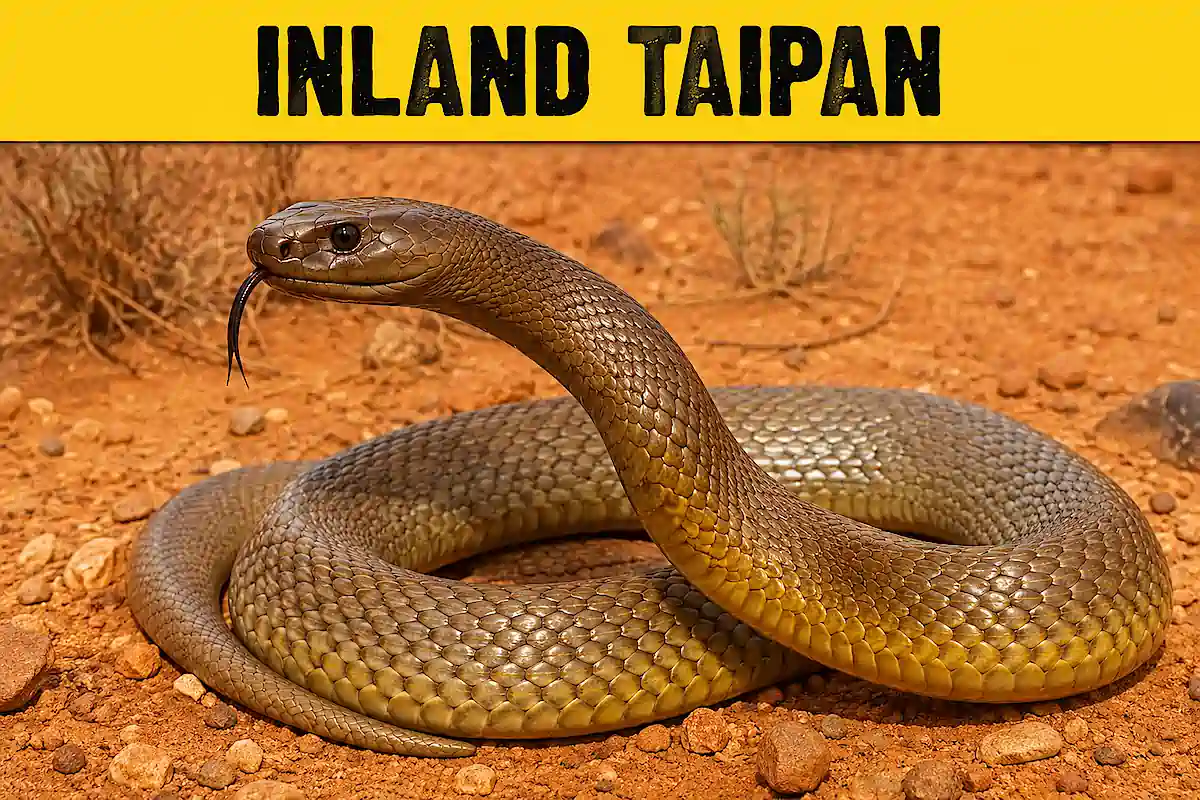
Not only is the Inland Taipan one of the most dangerous animals in Australia, but it is also often described as the world’s most venomous snake!
Fortunately, it lives in remote, dry parts of inland Australia and is rarely encountered by travellers. It is naturally shy and would much rather escape than start a fight.
Eastern Brown Snake
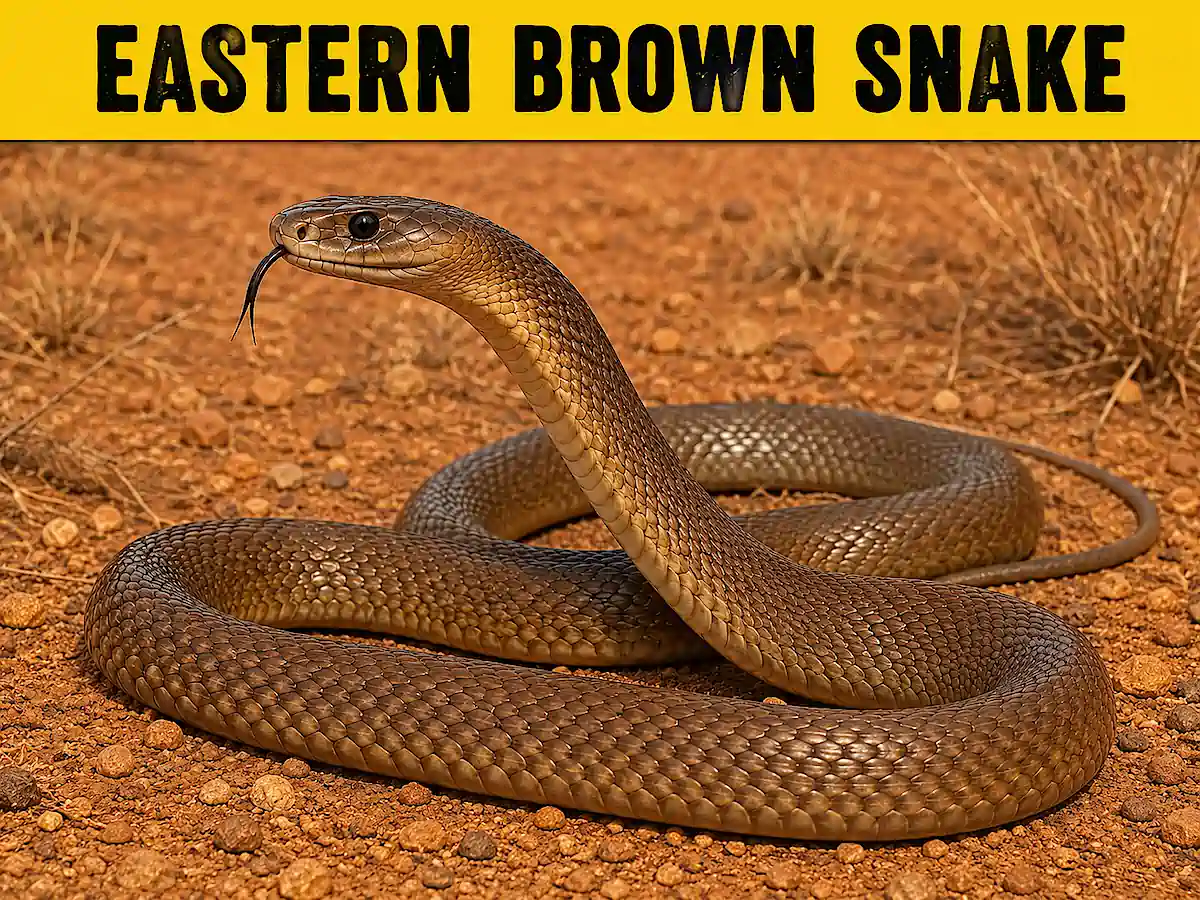
The eastern brown is far more relevant to most travellers because it is widespread across eastern Australia.
It can live near farms, country towns and the outer suburbs of major cities. It normally tries to escape, but may defend itself if surprised or cornered.
Brown snakes are involved in around one third of Australian hospital visits for snake bites, making them one of the most dangerous animals in Australia.
Coastal Taipan
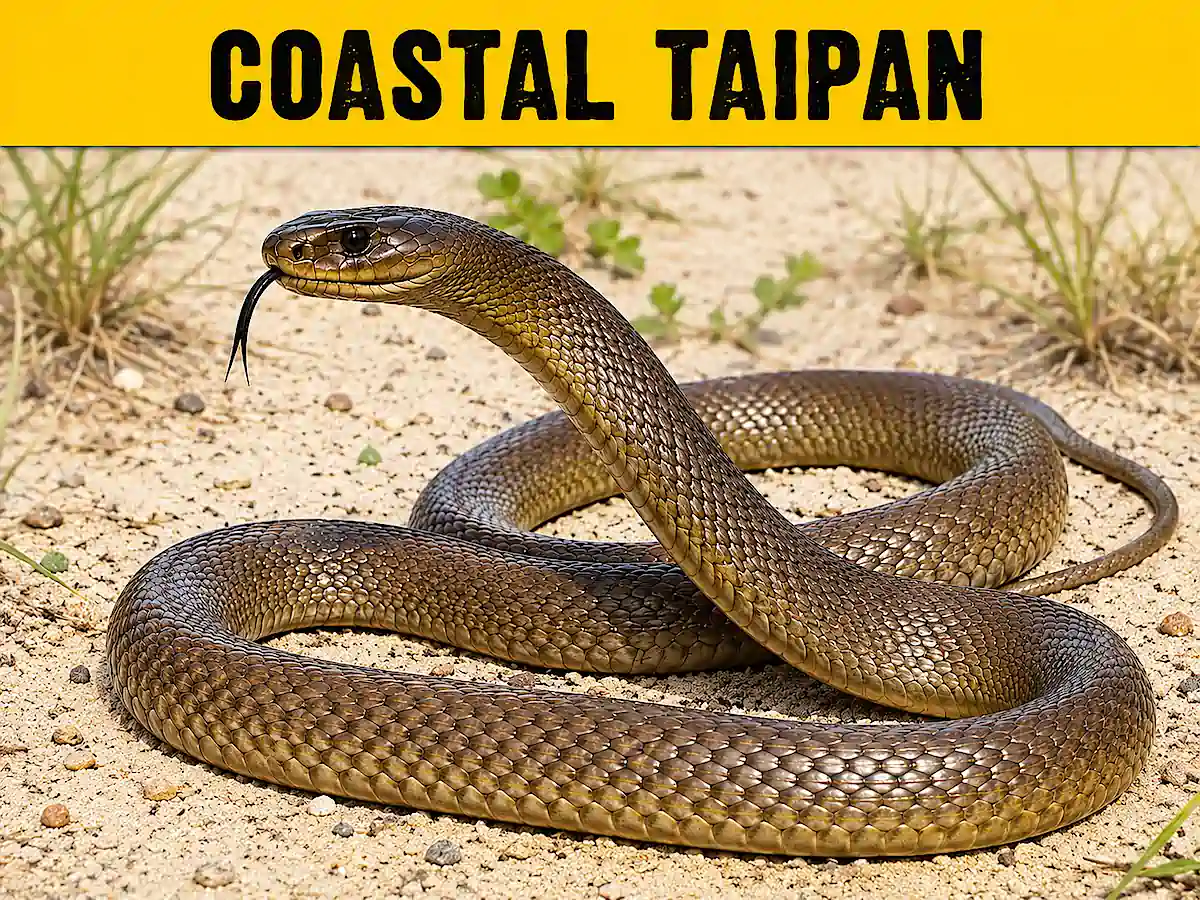
Coastal taipans live across tropical northern Australia, including northern Queensland, the Northern Territory and parts of northern Western Australia.
They are large, fast and highly venomous!
Other Venomous Snakes
Travellers may also encounter tiger snakes in southern Australia and Tasmania, while death adders often hide beneath leaves, bark and loose ground.
What Should You Do If You See a Snake?
Stay calm, keep your distance and allow the snake to move away.
Never try to catch, touch or kill it.
Use a torch when walking outside at night. Watch where you place your hands and feet, and wear boots and long trousers in long grass or bushland.
What Should You Do After a Snake Bite?
Treat every suspected snake bite as a medical emergency and call 000 immediately.
Keep the person completely still and apply a pressure immobilisation bandage.
Do not wash, cut or suck the bite, and never use a tourniquet.
Dangerous Animals in Australia: Sharks!
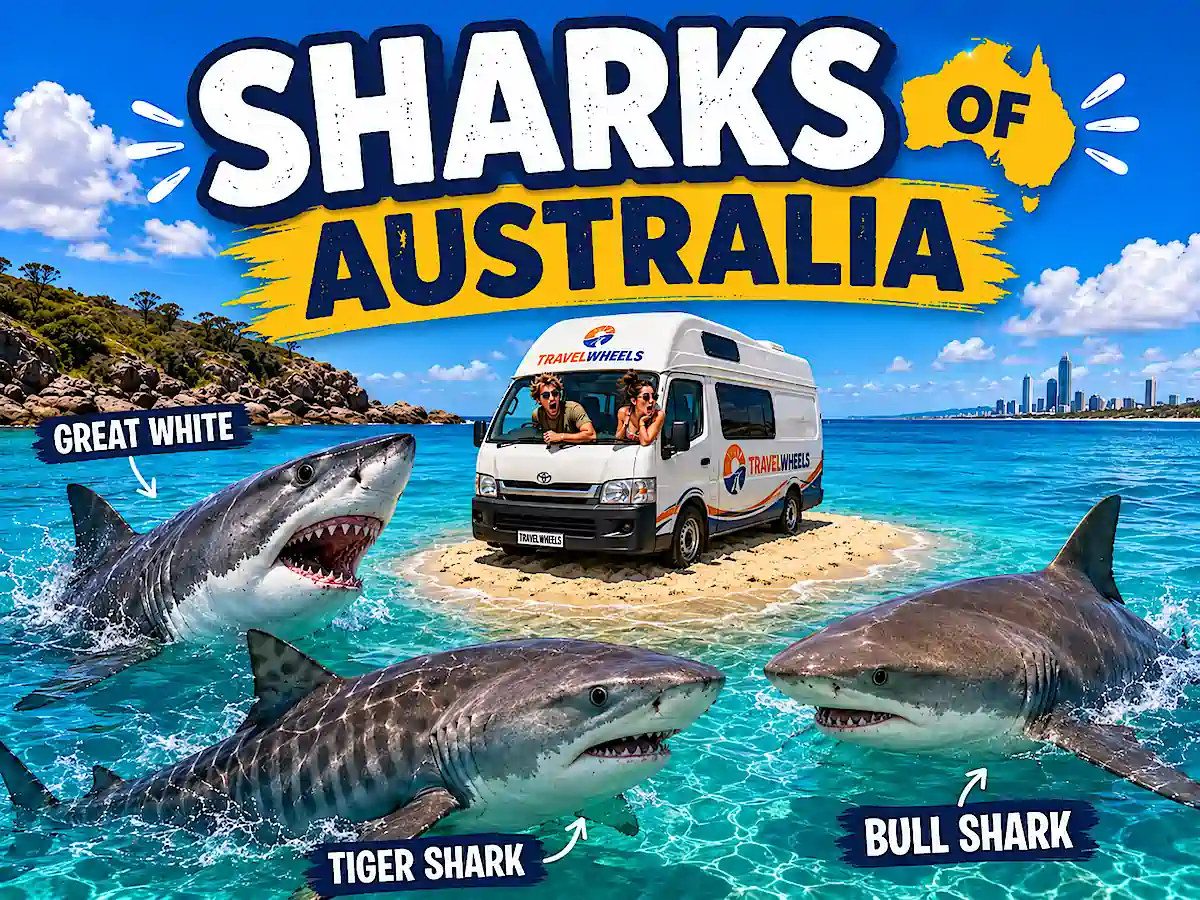
Australia is home to many dangerous shark species!
The three sharks visitors are most likely to recognise are the great white shark, tiger shark and bull shark.
Great whites are powerful ocean predators found mainly around southern Australia.
Tiger sharks prefer warmer coastal waters, while bull sharks can enter rivers, estuaries and harbours as well as the ocean.
Sharks are a natural part of the Australian marine environment, so no beach can ever be completely free of risk.
Following local safety advice can make that risk even smaller.
How Can You Reduce the Risk of a Shark Encounter?
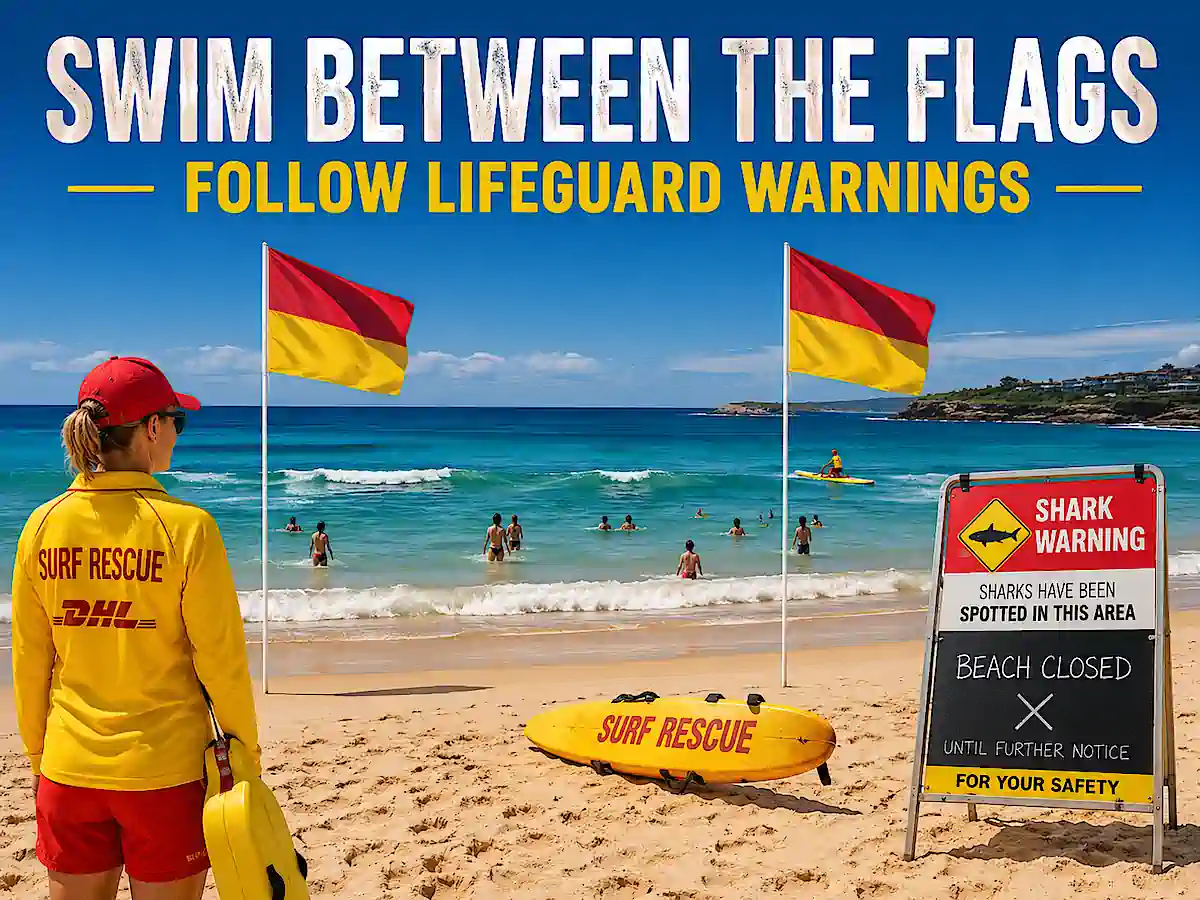
Swim at patrolled beaches and always stay between the red and yellow flags.
Lifeguards monitor the water and may sound an alarm or close the beach if a shark is spotted.
Avoid swimming alone or entering the water at dawn, dusk or night.
Stay out of murky water, river mouths and areas where people are fishing or cleaning fish.
Watch for large groups of baitfish, diving seabirds or unusual fish activity. These may indicate that larger predators are feeding nearby.
What Should You Do If a Shark Is Spotted?
Leave the water calmly and without unnecessary splashing.
Tell a lifeguard or lifesaver immediately and warn anyone nearby.
Always obey shark alarms, warning signs and beach closures.
Do not return to the water until lifeguards confirm that the beach has reopened.
Can You Swim With Sharks in Australia?
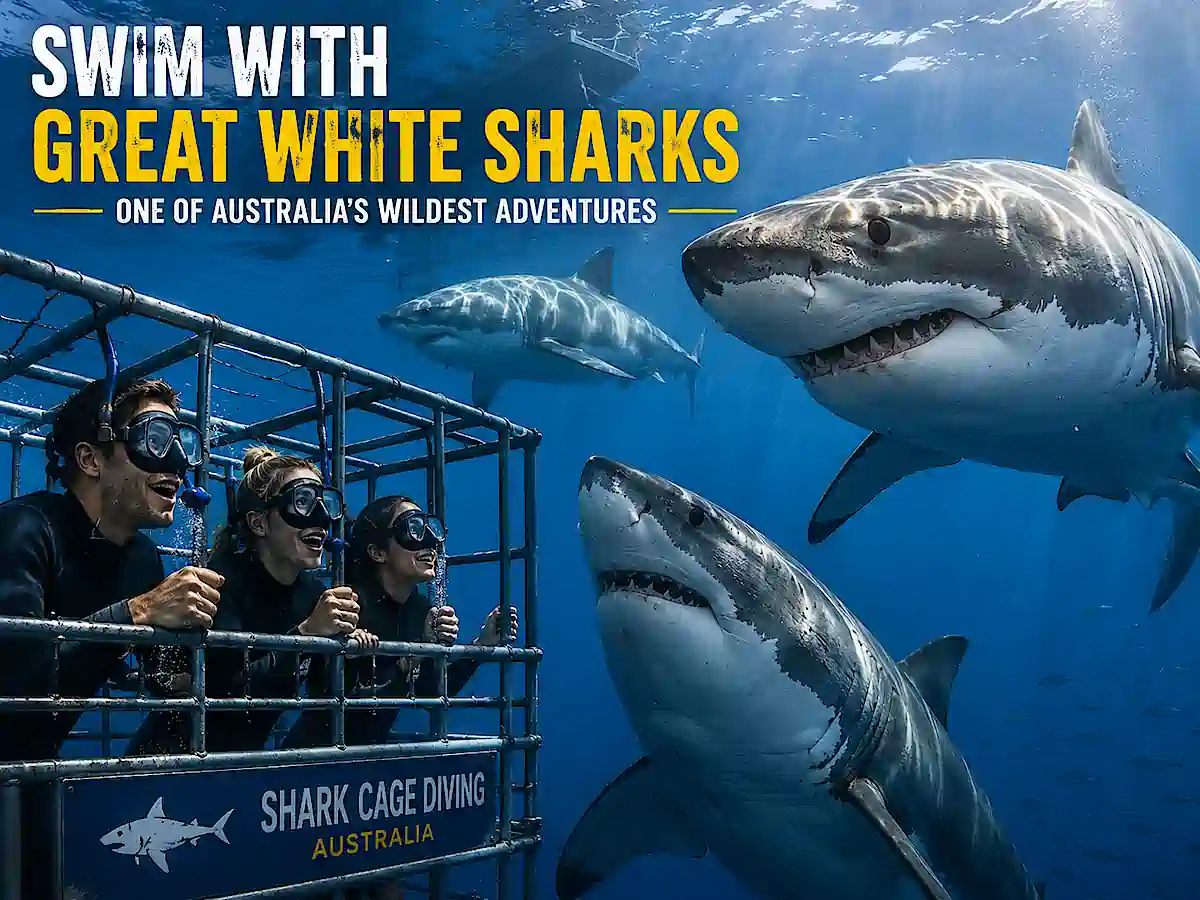
Yes. Organised shark cage diving gives adventurous travellers the chance to see great white sharks from inside a strong underwater cage.
It can be one of Australia’s most unforgettable wildlife experiences.
Great white sharks are protected in Australian waters and must not be harmed or harassed.
Dangerous Animals in Australia: Box Jellyfish!
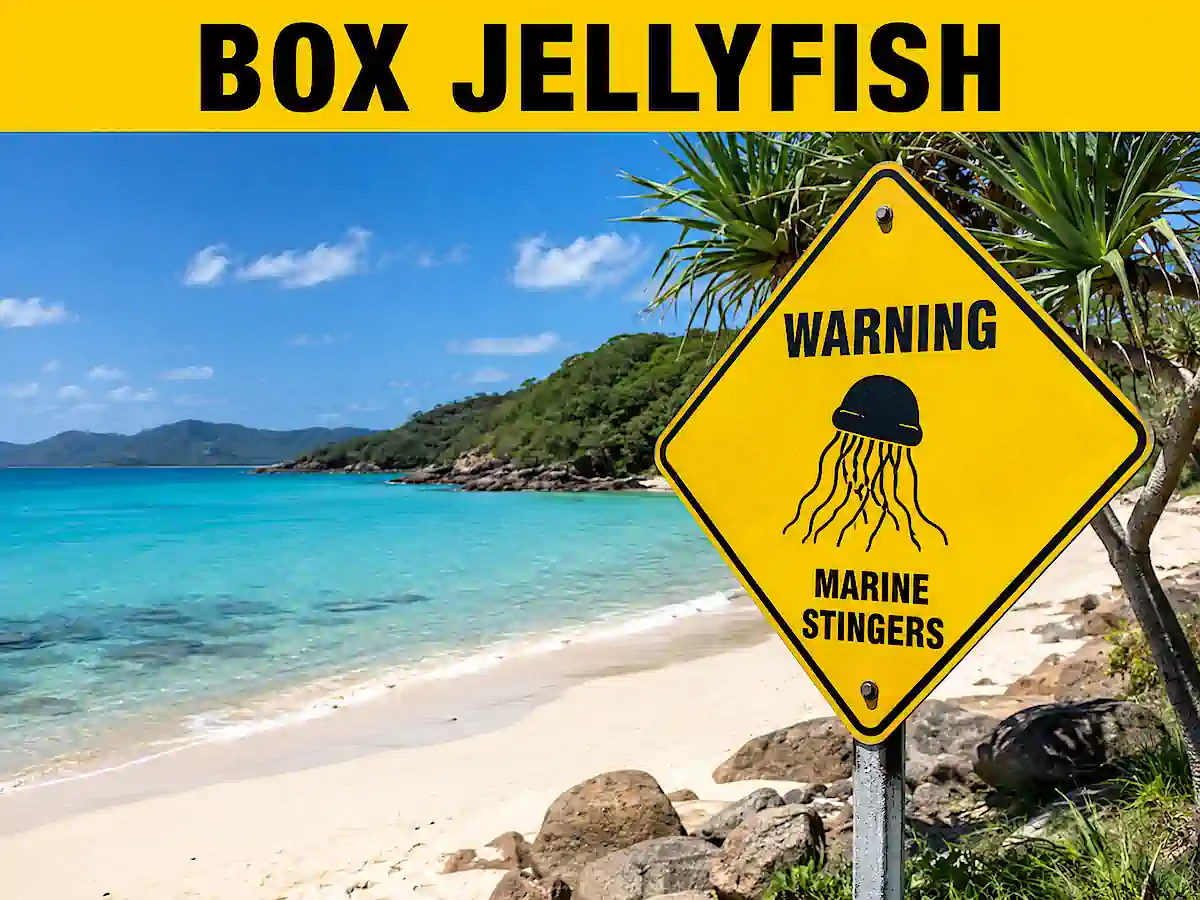
Box jellyfish are among the most dangerous animals in Australia, but they can be almost impossible to see in clear tropical water.
They live along the northern coast of Australia, including northern Queensland, the Northern Territory and northern Western Australia.
Their tentacles contain powerful venom that can cause extreme pain, collapse and, in severe cases, death.
Locals sometimes describe a serious sting as the “death of a 1000 cuts”.
That is why marine stinger warnings should never be ignored.
When Is Box Jellyfish Season?
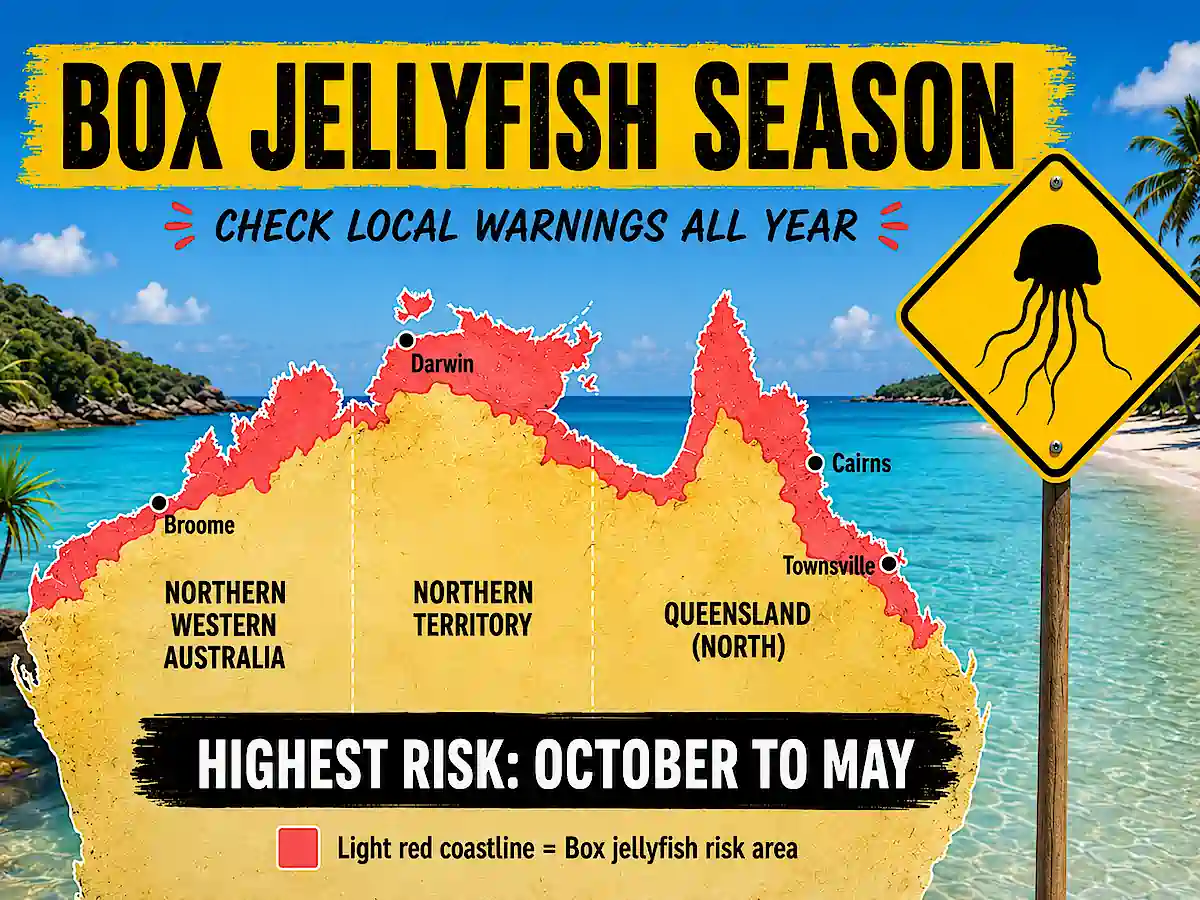
The highest risk is generally from October to May, during the warmer and wetter months.
However, timing varies across northern Australia, and stings can happen outside the main season.
Always check local warnings before entering tropical water.
How Can You Avoid Box Jellyfish?
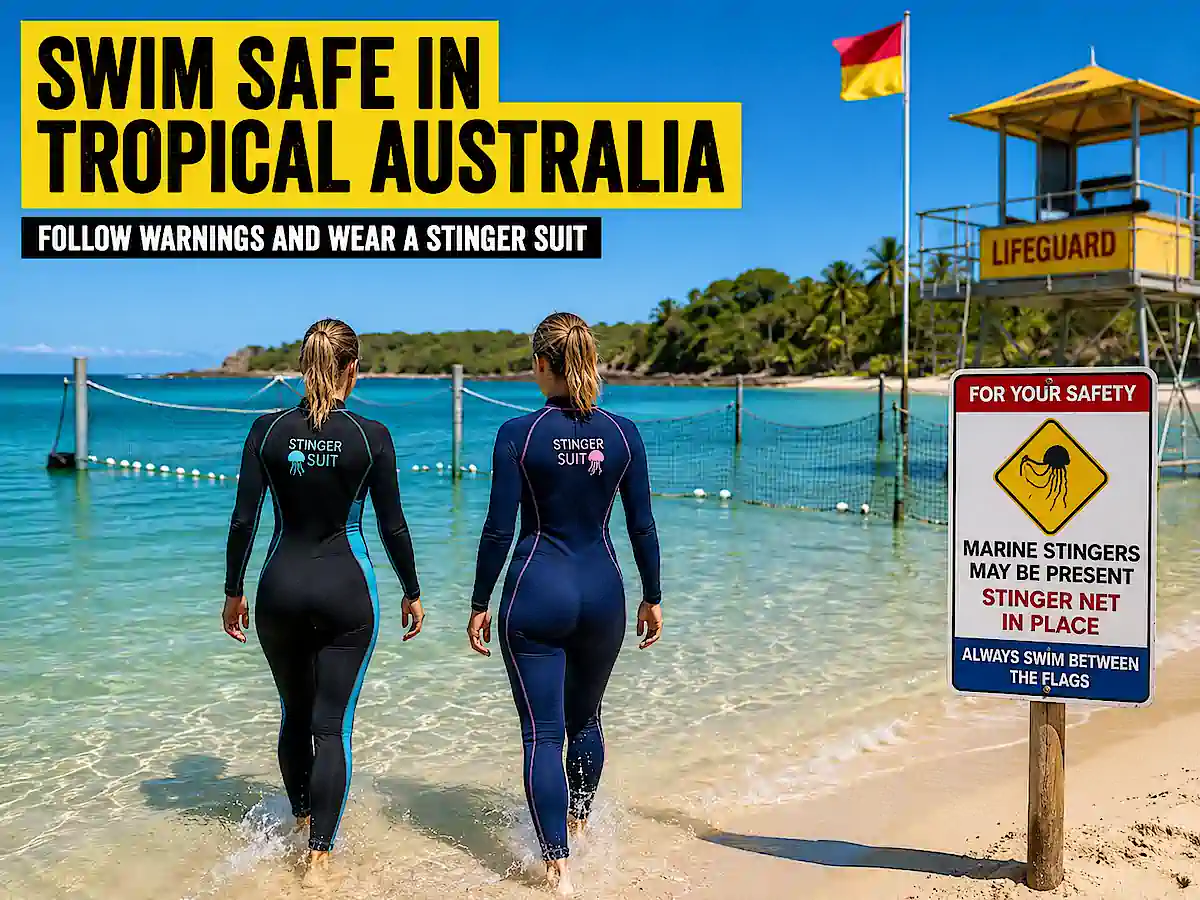
Swim at patrolled beaches and use designated stinger enclosures where available.
Wear a full-length stinger suit when advised.
Never enter the water when marine stinger warnings are displayed.
Do not touch jellyfish washed onto the beach. Their tentacles may still sting even when they appear to be dead.
What Should You Do After a Box Jellyfish Sting?
Treat a suspected box jellyfish sting as a medical emergency and call 000 immediately.
Get the person out of the water.
Begin CPR if they are unresponsive or not breathing normally.
Pour vinegar over the sting for at least 30 seconds and carefully remove any remaining tentacles.
Do not wash the sting with fresh water.
The person needs urgent medical treatment, even if they appear to recover.
Dangerous Animals in Australia: Crocodiles!
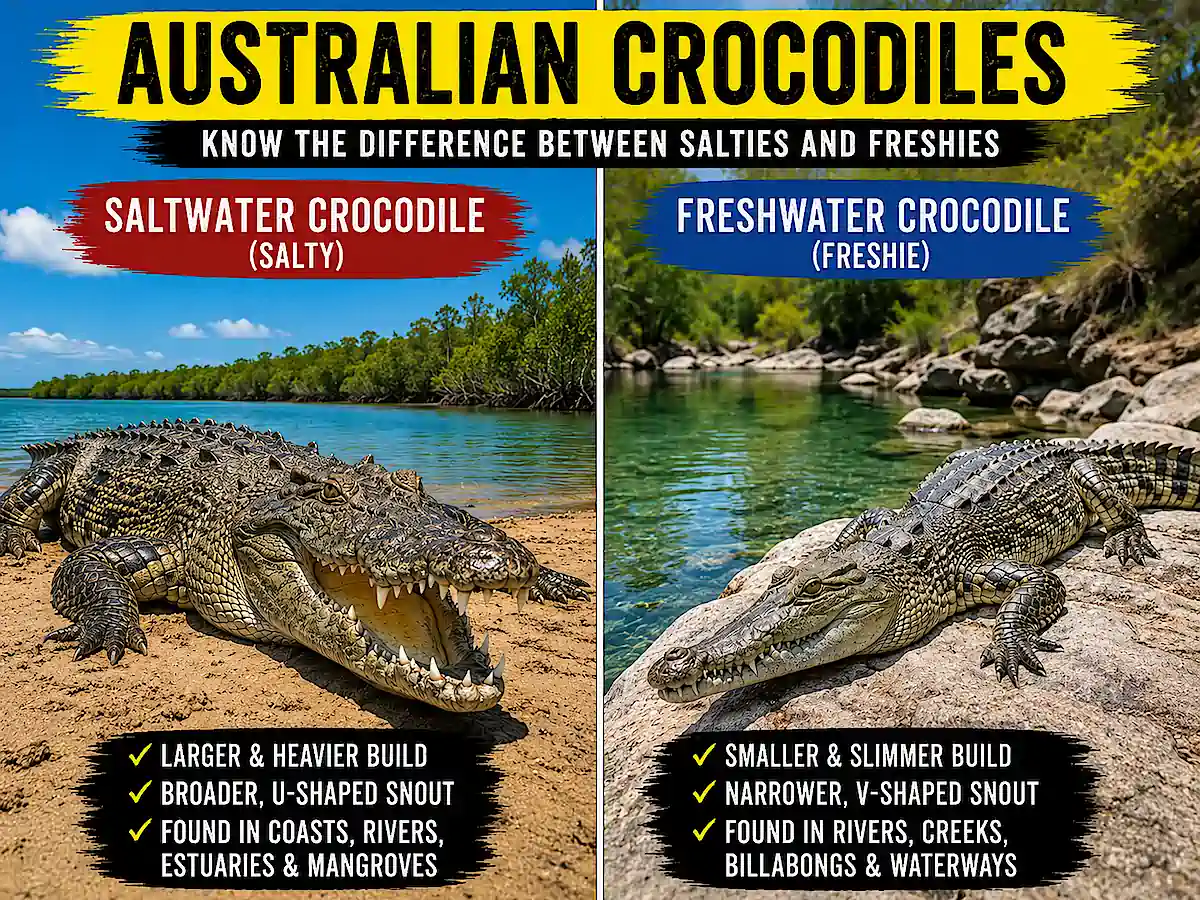
Australia has two main types of crocodile: the saltwater crocodile, known locally as a salty, and the freshwater crocodile, known as a freshie.
Salties are larger, heavier and one of the most dangerous animals in Australia!
Freshies are smaller and generally avoid humans, but they may still bite if disturbed or provoked.
Where Do Crocodiles Live in Australia?
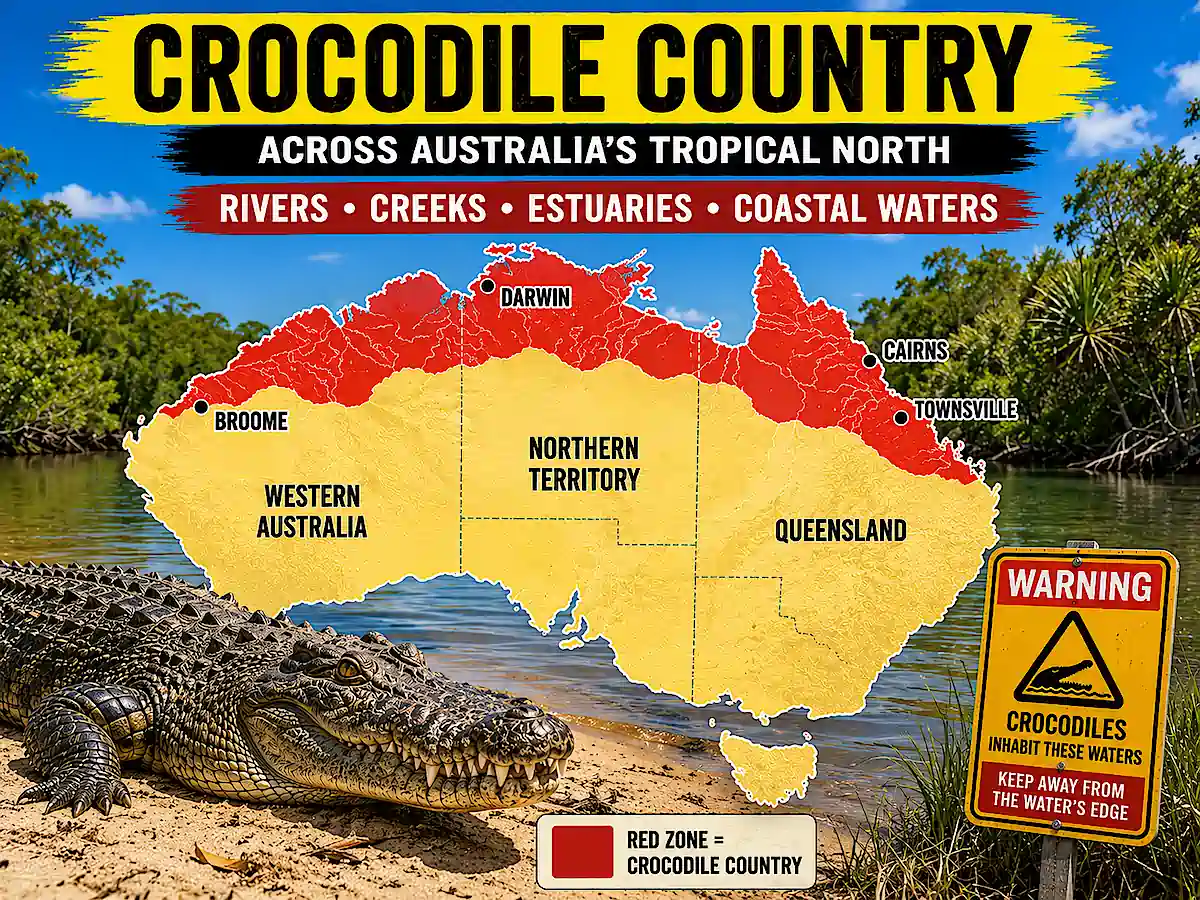
Crocodile country stretches across tropical northern Australia, including northern Western Australia, the Northern Territory and northern Queensland.
Despite their name, saltwater crocodiles do not live only in the sea.
They can be found in rivers, creeks, estuaries, wetlands, freshwater pools, and coastal waters, which makes them one of the most dangerous animals in Australia.
How Can You Stay Safe in Crocodile Country?
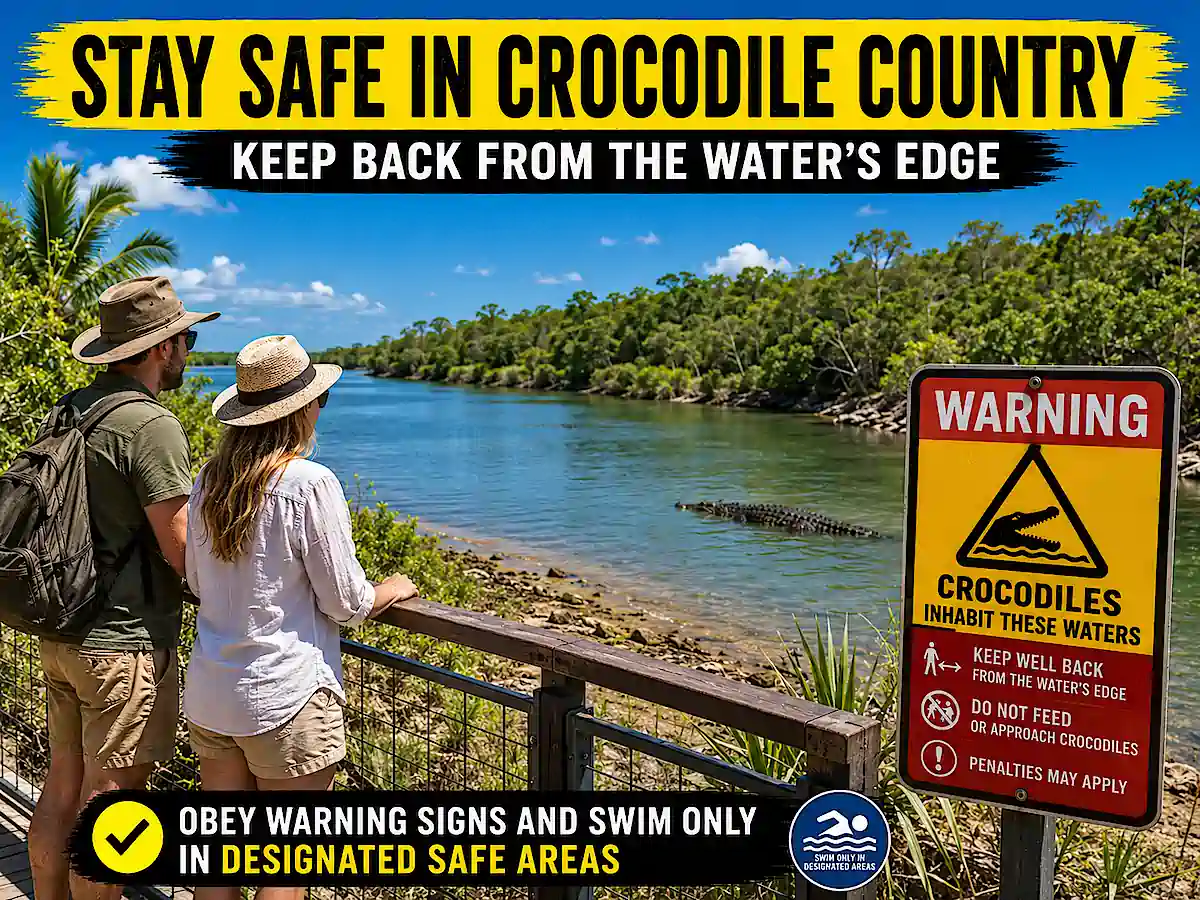
Always obey crocodile warning signs and stay more than five metres back from the water’s edge.
Never enter water where crocodiles may live, even if it looks shallow or there is no warning sign.
Take extra care at dawn, dusk and night, when crocodiles are harder to see.
Never feed, approach or provoke a crocodile.
Do not leave food, bait or fish scraps near waterways, campsites or boat ramps.
What Should You Do If You See a Crocodile?
Keep your distance and move away from the area.
Never move closer for a photograph.
Remember the local rule:
Just because you cannot see a crocodile does not mean one is not there.
Dangerous Animals in Australia: Bluebottles!
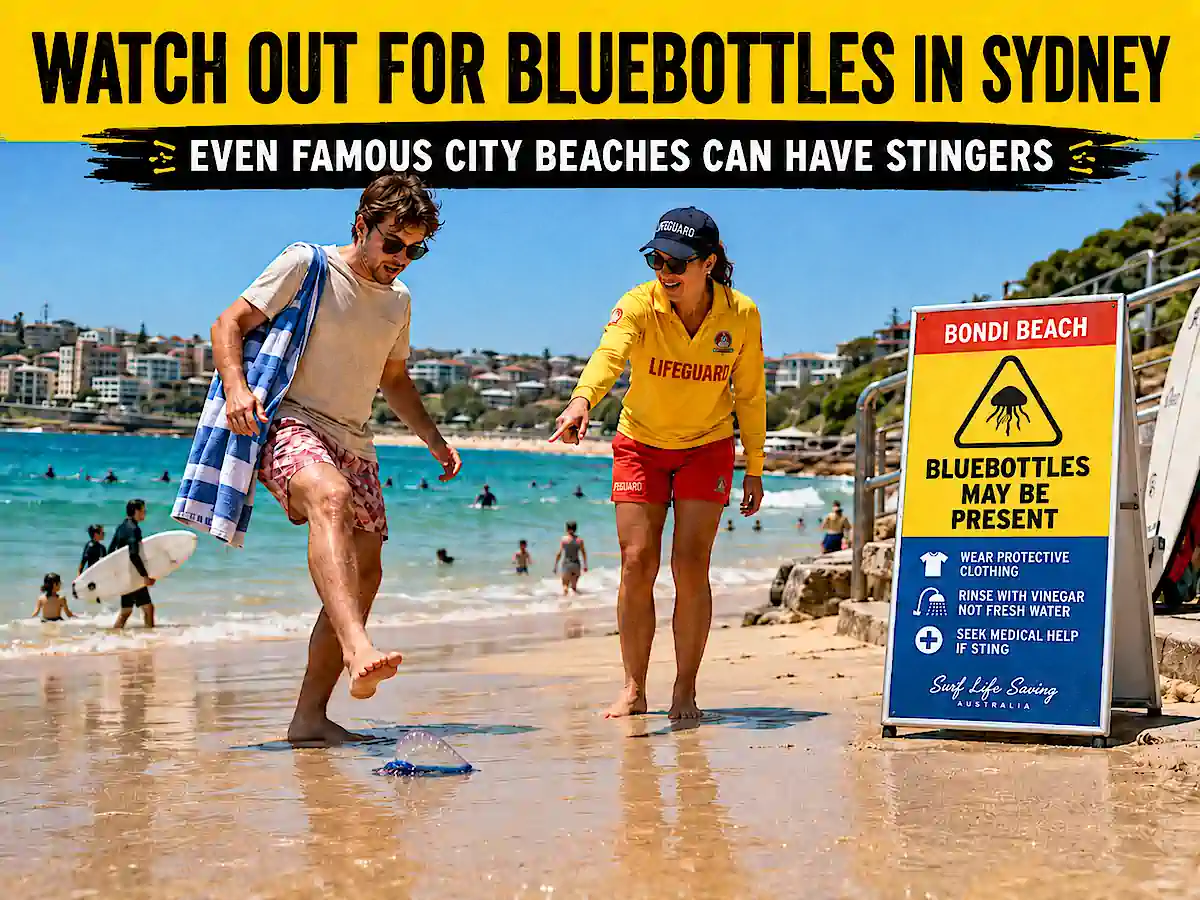
Bluebottles are common around Sydney and other parts of Australia’s coastline.
They are carried by winds and currents, and can wash onto beaches in large numbers.
They are not among the most dangerous animals in Australia, but their stings can be extremely painful.
Never touch a bluebottle or its tentacles, even when it has washed onto the sand.
What Should You Do After a Bluebottle Sting?
Leave the water and ask a lifeguard for help.
Rinse the area with seawater, not fresh water.
Place the affected area in comfortably hot water for around 20 minutes.
Do not use vinegar on a bluebottle sting.
Call 000 if the person has difficulty breathing, collapses or shows signs of a severe allergic reaction.
Australia’s top road trips as voted by our customers
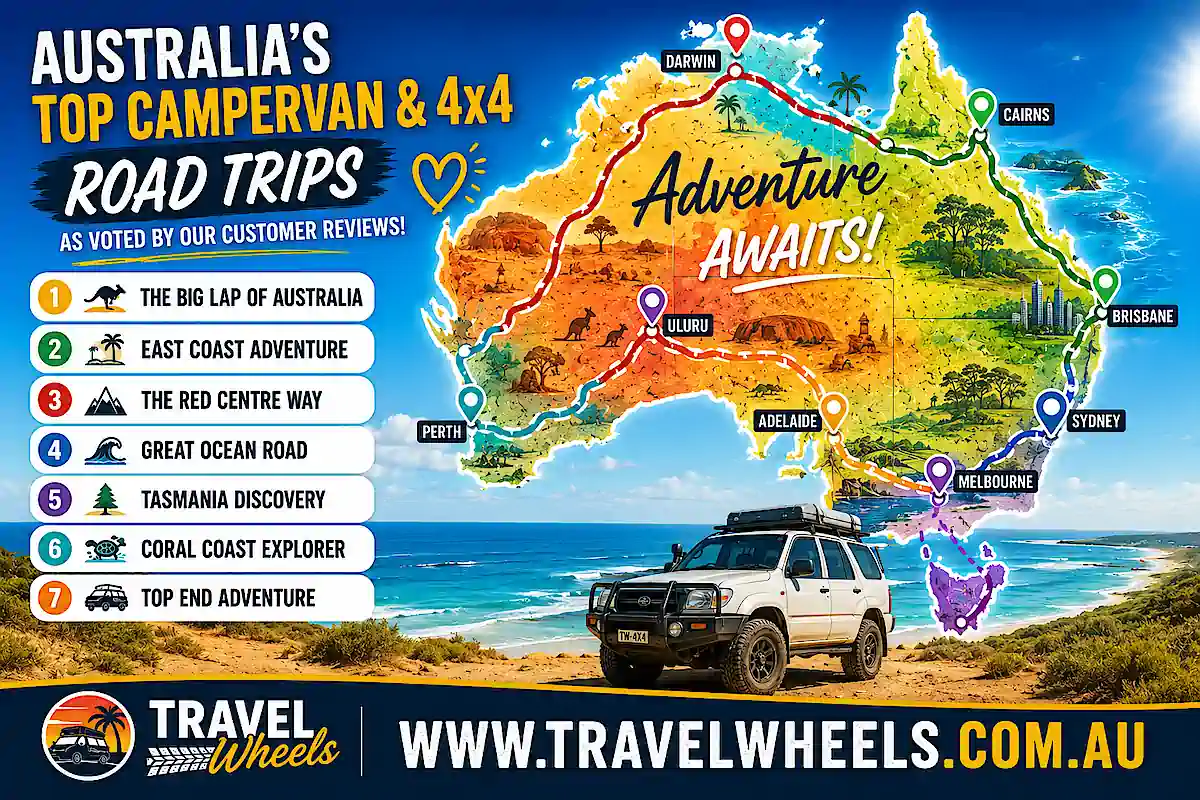
Below are some of our customers’ favourite road trips, with practical advice to help you avoid dangerous animals in Australia.
Road Trip Planners in English
- Sydney to Cairns Route Planner
- Cairns to Sydney Route Planner
- Melbourne to Sydney Route Planner
- Great Ocean Road Route Planner
- Sydney to Jervis Bay – see the dolphins
- Northern Queensland – from Cairns to Cape Tribulation
- Free camping on the East Coast of Australia guide
Guides d’itinéraires en français
Routenplaner auf Deutsch
- Routenplaner Sydney – Cairns
- Routenplaner Cairns – Sydney
- Routenplaner Melbourne – Sydney
- Von Sydney in die Blue Mountains
- 10 Tage Great Ocean Road Reiseführer
- Die Giganten Australiens: The Big Things in Australien
- Reiseführer Cairns und Umgebung – 7-10 Tage Rundreise Queensland
I hope you enjoyed reading about some of the most dangerous animals in Australia.
Our team originally came from Europe and fell in love with this incredible country.
We are always happy to share our travel tips and advice.
You are welcome to pop into our Sydney office for a chat, and we can share some of our most memorable stories about dangerous animals in Australia.
Contact Travelwheels for English and German Support
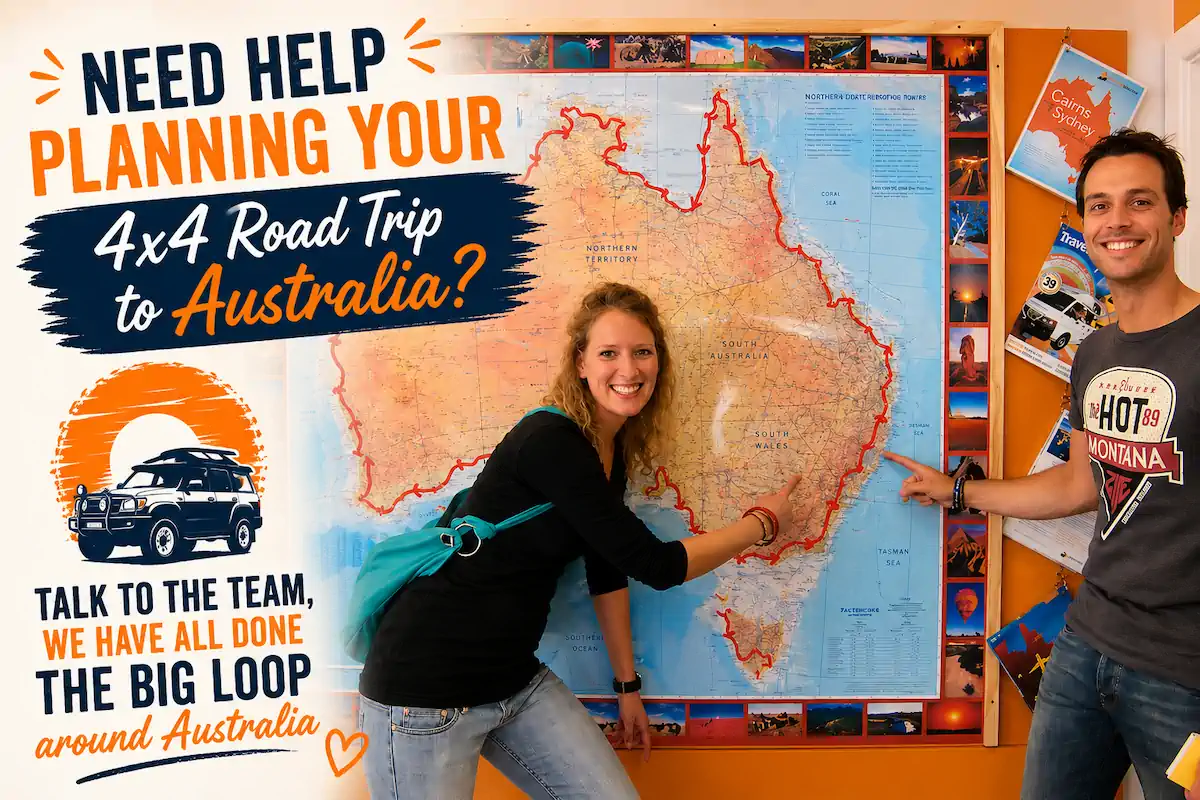
Travelwheels is based in Botany, Sydney, and helps international travellers buy, sell and trade campervans and 4x4s in Sydney.
Our address is Travelwheels Campervans, 11-15 Clevedon Street, Botany, Sydney, NSW 2019.
Our team has travelled extensively around the country, and we have all completed the Big Loop of Australia.
We are happy to share practical advice about routes, camping, local wildlife and how to stay safe around dangerous animals in Australia.
English & German Support
Maxi is fluent in English and German and can answer your questions in either language.
Road Trip Advice
Need help choosing a route, planning where to stop or understanding what to expect in different parts of Australia? We are always happy to share our experience.
Campervan and 4×4 Support
Contact us before you begin your journey, we can show you how your campervan or 4×4 works and answer any questions you may have.
Fragen auf Deutsch? Maxi hilft dir gerne weiter!
Wir freuen uns darauf, dich bei deinem Abenteuer zu unterstützen. Ruf uns an unter 0412 766 616.
Du kannst uns auch per E-Mail auf Deutsch kontaktieren.
Contact Travelwheels Botany: 0412 766 616
